Description
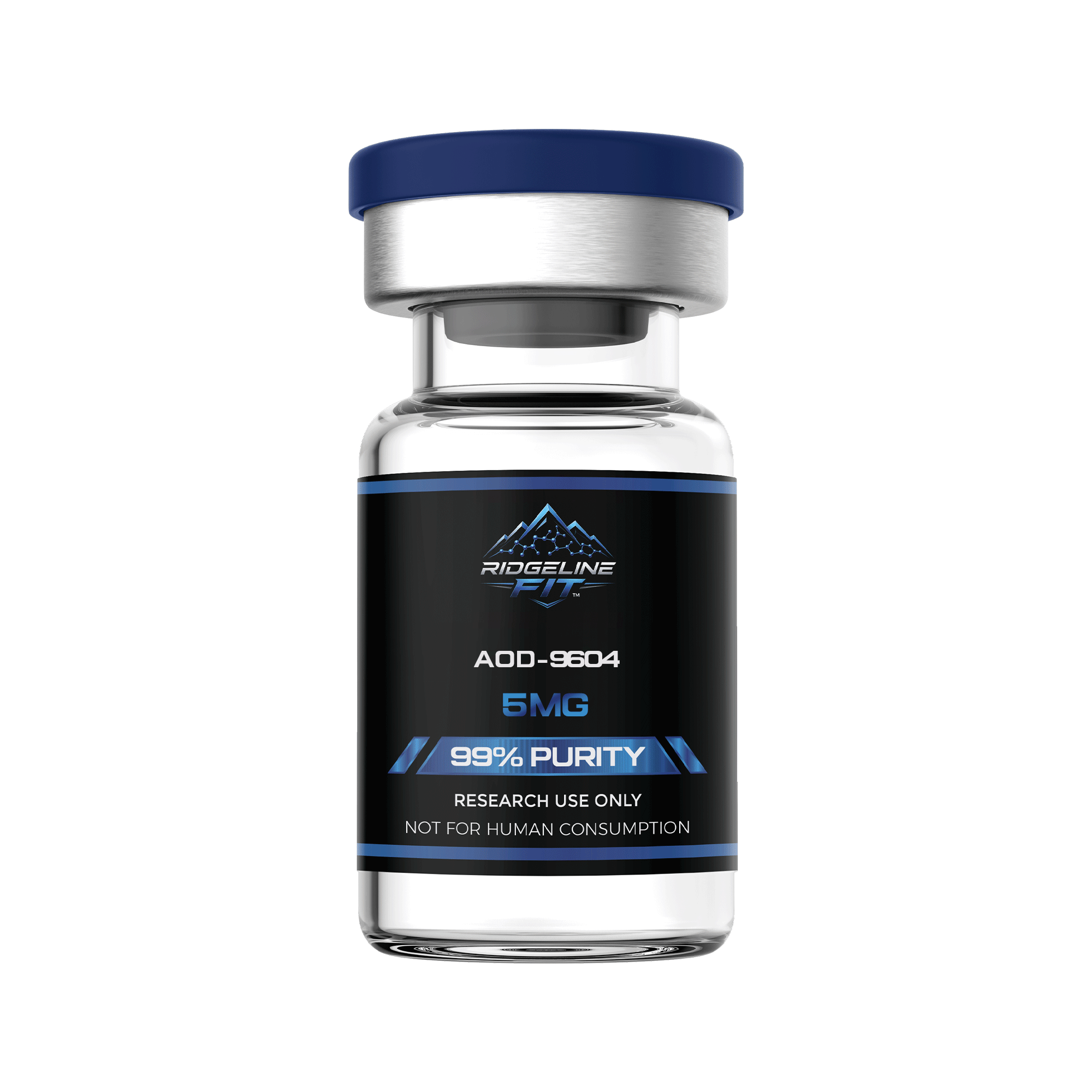
Chemical Structure of AOD-9604
The chemical composition of AOD-9604 consists of 16 amino acids:
Tyr-Leu-Arg-Ile-Val-Gln-Cys-Arg-Ser-Val-Glu-Gly-Ser-Cys-Gly-Phe
This sequence represents a modified version of the hGH 176–191 fragment. The structure includes a disulfide bond, which supports peptide stability and makes it suitable for controlled laboratory research applications.
Observed Research Findings in Laboratory Models
Selective Lipid Metabolism Pathway Studies
Preclinical studies use AOD-9604 to evaluate lipid metabolism activity, including observed modulation of adipocyte signaling pathways in experimental systems.
β₃-Adrenergic Receptor Pathway Analysis in Adipocyte Models
Research indicates that AOD-9604 may interact with β₃-adrenergic receptor pathways in adipocyte models, allowing investigators to study lipid oxidation signalling and adipose tissue pathway behavior under controlled conditions.
Cartilage Pathway Modelling and Connective Tissue Analysis
Animal and laboratory models have explored AOD-9604 in relation to cartilage pathway modelling and connective tissue analysis, particularly in musculoskeletal research settings.
Laboratory Stability and Reproducibility
Laboratory findings confirm peptide stability and reproducibility in controlled experiments, supporting its use in structured research protocols.
Alternative Laboratory Administration Models
AOD-9604 has also been studied for observed activity in alternative laboratory administration models, making it of interest in experimental peptide delivery and bioactivity studies.
Research Use Disclaimer
This AOD-9604 product is supplied strictly for laboratory and scientific research. It is not intended for human or veterinary use, and no dosing, clinical, or medical advice is provided. Handle and store under appropriate laboratory conditions and institutional approvals.


Reviews
There are no reviews yet.