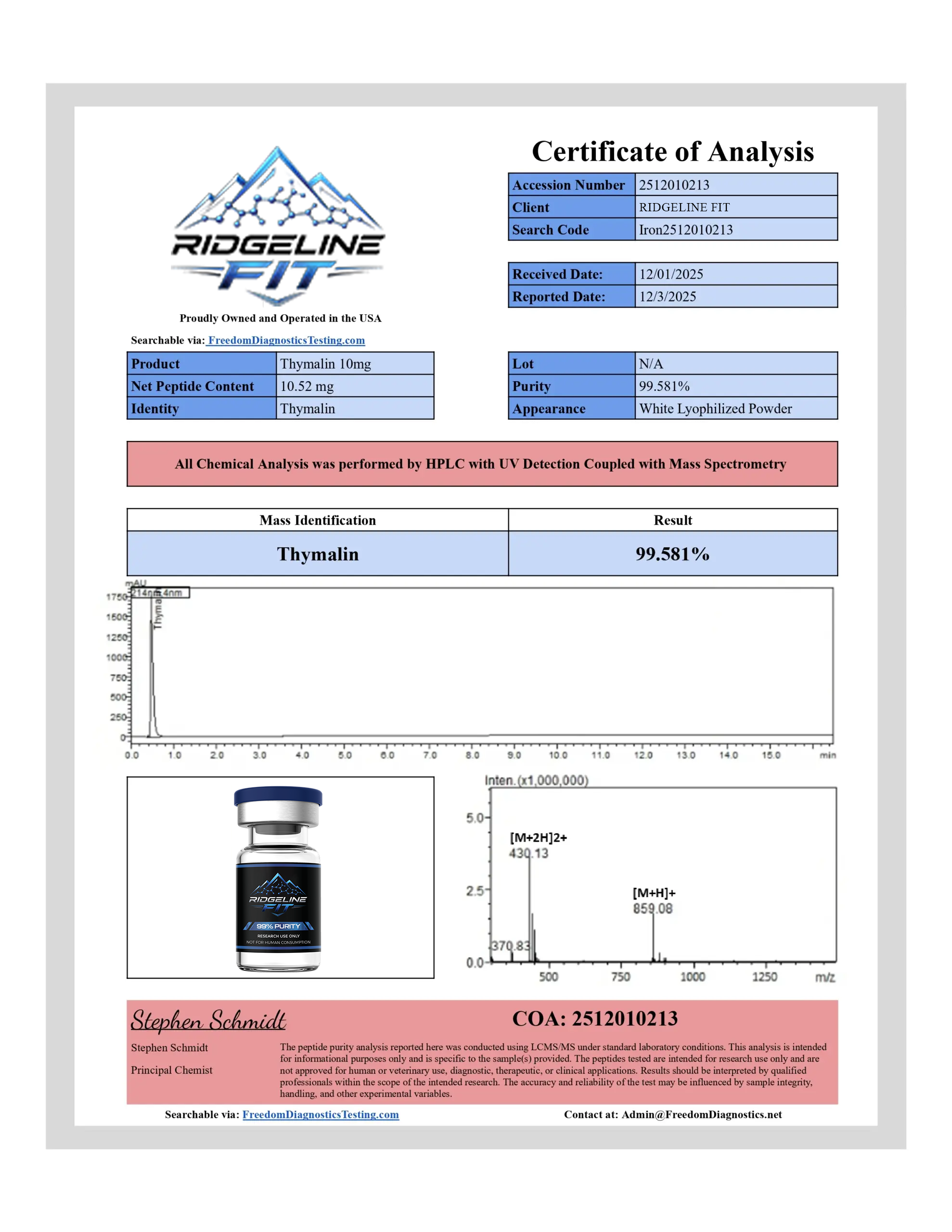
Description
Chemical Structure of Thymalin
Thymalin’s active nonapeptide, thymulin, possesses the sequence Pyr–Ala–Lys–Ser–Gln–Gly–Gly–Ser–Asn–OH, with a molecular weight of 858.9 Da (PubChem CID 3085284). The preparation also contains short dipeptides (EW, KE) and a tripeptide (EDP), which contribute to its biological activity by interacting with DNA and histone proteins to epigenetically modulate gene expression linked to immune and regenerative functions.
Observed Research Findings in Laboratory Models
Lymphocyte Differentiation & Immune Regulation: Thymalin studied for associations with hematopoietic differentiation and apoptosis signaling in vitro.
Immunomodulation & Anti-Inflammatory Action: It examined in experimental systems for modulation of cytokine signaling pathways.
Hematopoiesis & Regeneration: Thymalin normalizes hematopoietic function by supporting T and B cell populations, NK cell activity, and blood coagulation balance during studied for hematopoietic pathway regulation in laboratory models.
Geroprotection & Aging Resistance: Studies in aged animals show regulation of gerontogenes and heat shock proteins, structural restoration of immunity, and applied in aging pathway studies for associations with stress-response and immune signaling.
Epigenetic Gene Regulation: The EW and KE peptide components bind histones and double-stranded DNA to examined for histone and DNA binding interactions in gene regulation studies.


Reviews
There are no reviews yet.