Chemical Structure of SS-31
Sequence: D-Arg–Dmt–Lys–Phe–NH₂ (Dmt = 2,6-dimethyl-L-tyrosine).
Other identifiers: PubChem CID 11764719; synonyms include Elamipretide, SS-31, MTP-131, Bendavia.
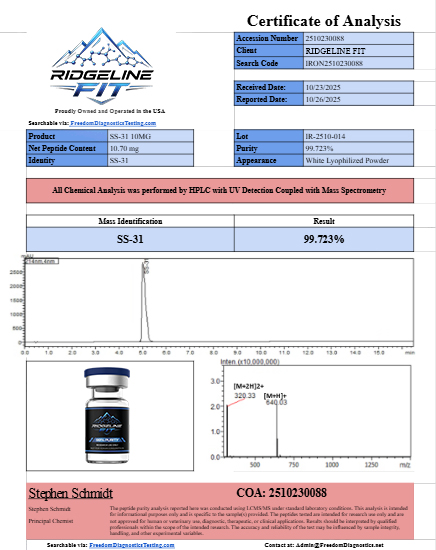
Molecular formula & mass: C₃₂H₄₉N₉O₅; approx. 639.8 Da.
Properties relevant to research use: small, aromatic-cationic tetrapeptide with a C-terminal amide; net positive charge promotes mitochondrial uptake and cardiolipin interaction. Supplier specs typically list ≥98–99% purity and lyophilized white powder for reconstitution.
Observed Research Findings in Laboratory Models
Below are the major, evidence-backed research findings and experimental uses:
— Mitochondrial bioenergetics and ATP restoration.
SS-31 studied in animal models for associations with electron transport chain signaling and ATP modulation.
— Cardiolipin binding and membrane stabilization.
SS-31 preferentially localizes to the inner mitochondrial membrane and binds cardiolipin, examined for cardiolipin binding and mitochondrial membrane signaling in vitro.
— Reduction of oxidative stress and prevention of mitochondrial permeability transition.
Numerous preclinical studies show SS-31 lowers mitochondrial reactive oxygen species (ROS) and reduces downstream oxidative damage, which contributes to protection in models of ischemia, neurotrauma, and organ injury.
— Organ-level protective effects (cardiac, renal, neural, retinal).
Elamipretide has demonstrated studied in diverse preclinical models including cardiac, renal, neural, and retinal signaling pathways.
— Clinical development & indications under investigation.
Elamipretide has advanced into human clinical trials for mitochondrial myopathies, Barth syndrome, and retinal diseases (e.g., dry age-related macular degeneration). The developer has reported multiple clinical studies; more recently elamipretide received regulatory attention and has been approved for at least one mitochondrial indication. (See clinical trial registry and regulatory sources for current status in your region).
Research applications: mechanistic studies of mitochondrial dysfunction, ischemia/reperfusion injury models, aging and sarcopenia studies, neuroprotection research, ophthalmic mitochondrial dysfunction models, and small-molecule peptide pharmacology.
Safety, formulation & typical supplier specs (research materials)
Form: lyophilized white powder (reconstitute per supplier instructions).
Purity: commonly ≥98–99% (HPLC) for research lots.
Storage: store lyophilized at ≤ −20 °C, protect from moisture and light; prepare aliquots when reconstituting to avoid repeated freeze-thaw cycles.
Safety: in preclinical and clinical studies elamipretide has generally been well tolerated; injection-site reactions were a commonly reported, mild adverse event in trials. For any in-vivo work follow institutional animal care and use and biosafety protocols. Consult clinical trial data for human safety signals.
Regulatory & translational note (important)
Elamipretide has progressed into clinical development and—depending on jurisdiction—has been the subject of regulatory review for specific mitochondrial disorders. Recent regulatory milestones (including an FDA approval decision in 2025 for a mitochondrial indication) demonstrate translation beyond preclinical research; still, referenced in translational research contexts; remains a compound supplied strictly for laboratory investigation. Always check current regional regulatory status before any clinical-related work.







Reviews
There are no reviews yet.