Introduction
SLU-PP-332 is a synthetically engineered small molecule distinguished by its broad agonistic activity across the estrogen related receptor family, encompassing ERRα, ERRβ, and ERRγ. Its pharmacological profile has made it a subject of growing interest in experimental metabolism research, particularly for studying nuclear receptor mediated regulation of cellular energy systems. In laboratory models, SLU-PP-332 has been shown to engage transcriptional programs associated with mitochondrial activity and oxidative energy utilization, paralleling molecular adaptations typically observed during sustained aerobic activity. At the mechanistic level, SLU-PP-332 demonstrates notable potency toward ERRα, with reported half-maximal activation in the nanomolar range (EC₅₀ ≈ 98 nM). Activation of ERR dependent transcription networks influences genes involved in mitochondrial proliferation, lipid substrate processing, and glucose handling, providing a controlled framework for examining intracellular energy regulation. Unlike agents that act through membrane-bound receptors, SLU-PP-332 directly modulates nuclear receptor signaling, enabling broader investigation of transcriptional control over metabolic pathways. Preclinical evaluations in animal and cellular systems have reported alterations in metabolic markers consistent with enhanced oxidative capacity, shifts in body composition, and observed metabolic adaptations in preclinical models. These findings have positioned SLU-PP-332 as a applied in experimental systems to study exercise-related transcriptional programs. Overall, its continued investigation contributes to a deeper understanding of estrogen-related receptor biology and mitochondrial regulation within non-clinical research environments, rather than established clinical application.
Mechanism of Action
ERRγ Engagement SLU-PP-332 interacts with estrogen-related receptor gamma (ERRγ), an orphan nuclear receptor that exhibits baseline transcriptional activity in the absence of an endogenous ligand. Binding of SLU-PP-332 further amplifies ERRγ-driven transcription by facilitating the association of transcriptional coactivators, including regulators such as PGC-1α Gene Regulatory Activation Following receptor engagement, the ERRγ coactivator complex associates with estrogen-related receptor response elements (ERREs) located within regulatory regions of target genes. This interaction enhances transcriptional output of gene networks governing cellular energy production and substrate utilization. Upregulated Metabolic Pathways ERRγ-dependent transcriptional activation influences multiple metabolic programs, including:
Mitochondrial formation and functional capacity
Lipid utilization through β-oxidation pathways
Electron transport chain activity and oxidative phosphorylation
Glucose handling and metabolic flexibility
Cellular Metabolic Adaptation In metabolically active tissues such as skeletal muscle, exposure to SLU-PP-332 has been shown in experimental models to favor a shift toward oxidative energy metabolism. This reprogramming mirrors transcriptional patterns observed during endurance adaptation, with increased expression of genes involved in fatty acid transport, mitochondrial uncoupling, metabolic flux regulation, and respiratory chain function. Research and Translational Relevance Due to its capacity to modulate nuclear receptor–controlled energy pathways, SLU-PP-332 has been explored in preclinical research contexts focused on metabolic efficiency, muscle energetics, and cardiovascular energy demand. Observations from non-clinical models suggest its utility as a mechanistic tool for studying exercise-responsive transcriptional networks and fatigue resistance, rather than as a validated therapeutic intervention.
Chemical Structure of SLU-PP-332 (5MG)
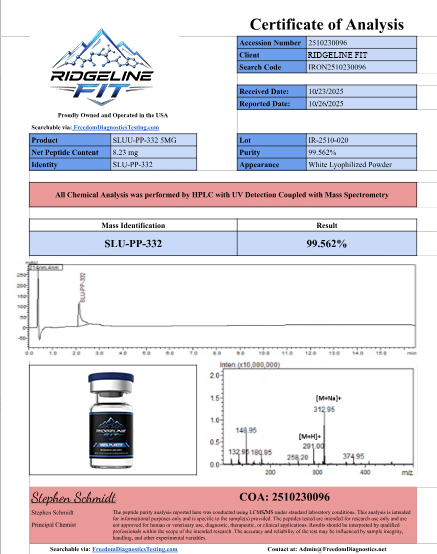
Chemical Formula: C₁₈H₁₄N₂O₂
Molecular Weight: 290.3 g/mol
PubChem CID: 5338394
CAS No.: 303760-60-3
Synonyms: 4-Hydroxy-N’-(naphthalen-2-ylmethylene)benzohydrazide
What Are the Effects of SLU-PP-332 (5MG)?
Experimental Metabolic Pathway Modulator
SLU-PP-332 plays a key role in regulating cellular energy metabolism, mitochondrial activity, and oxidative phosphorylation. ERRγ is predominantly expressed in high energy demand tissues, including skeletal muscle and cardiac tissue, where it governs transcriptional programs linked to oxidative capacity and metabolic endurance (Giguère V, 2008).
Activation of ERRγ by SLU-PP-332 leads to enhanced transcription of genes involved in mitochondrial biogenesis, lipid oxidation, and glucose handling. This transcriptional profile closely resembles molecular adaptations typically observed following endurance-type exercise stimuli (Narkar VA et al., 2011). Notably, ERRγ-responsive genes such as CPT1b, PDK4, and UCP3 are associated with increased fatty acid utilization, conservation of glycogen stores, and optimization of oxidative metabolism within muscle cells (Rangwala SM et al., 2010).
Evidence from preclinical animal models indicates that exposure to SLU-PP-332 is associated with observed transcriptional changes in endurance-associated pathways in animal models, mitochondrial content, and oxidative metabolic markers, even in the absence of structured physical training (Fan W et al., 2013). These findings have led researchers to describe the compound as exhibiting exercise-like signaling patterns in preclinical studies at the molecular and metabolic level (Schuler M et al., 2006).
Beyond performance-related adaptations, ERRγ activation through SLU-PP-332 has been explored for its role in shifting metabolic pathways toward enhanced lipid utilization and improved metabolic flexibility. Such effects have generated interest in its potential relevance to metabolic research contexts involving altered energy balance or reduced physical capacity (Fan W et al., 2013; Narkar VA et al., 2011).
While SLU-PP-332 remains confined to preclinical investigation, its ability to induce transcriptional programs resembling endurance-associated adaptations continues to make it a subject of interest in metabolic and exercise biology research.
Endurance Pathway Studies – examined for associations with oxidative metabolism and mitochondrial signaling
SLU-PP-332 functions as a pharmacological modulator of estrogen-related receptor gamma (ERRγ), an orphan nuclear receptor that orchestrates transcriptional networks governing mitochondrial oxidative metabolism and endurance-associated muscle adaptations. ERRγ is a central regulator of oxidative muscle programming and contributes to the development of metabolic characteristics commonly observed following sustained endurance training (Giguère V, 2008).
Engagement of ERRγ by SLU-PP-332 leads to coordinated upregulation of genes involved in lipid utilization, mitochondrial expansion, and oxidative phosphorylation. These include transcriptional regulators and metabolic enzymes such as PGC-1α, CPT1b, UCP3, and multiple components of the mitochondrial electron transport chain (Narkar VA et al., 2011; Fan W et al., 2013). Collectively, these gene networks enhance the oxidative capacity of skeletal muscle, a feature closely associated with endurance-related performance metrics.
Findings from murine studies indicate that administration of SLU-PP-332 is associated with marked increases in endurance-related outcomes, including extended running duration and improved resistance to fatigue, even in the absence of exercise training. These effects have been linked to increases in mitochondrial content and improvements in muscle energy efficiency rather than changes in muscle mass or contractile strength (Fan W et al., 2013).
At a mechanistic level, SLU-PP-332 promotes a metabolic shift away from glycolytic reliance toward oxidative energy production. This transition is accompanied by increased expression of markers characteristic of slow-twitch (Type I) muscle fibers, which are optimized for sustained, low-fatigue activity (Schuler M et al., 2006). ERRγ activation also facilitates functional cooperation with transcriptional coactivators such as PGC-1α, further reinforcing endurance-associated transcriptional programs and mitochondrial remodeling (Wende AR et al., 2005).
It is to date, confined to preclinical evaluation still its capacity to induce endurance like molecular and metabolic adaptations has positioned it as a valuable research tool in the study of exercise biology and metabolic regulation, particularly in contexts where physical training capacity is limited.
It is summary graphic from the key paper on SLU-PP-332 as a synthetic pan-ERR agonist. It illustrates the overall concept of ERR activation mimicking exercise responses, leading to enhanced mitochondrial function and metabolic adaptation in tissues like skeletal muscle.
Muscle Function Research – studied for oxidative metabolism and fiber composition in experimental models
It is a synthetic small-molecule activator of estrogen-related receptors (ERRα, ERRβ, and ERRγ), with its biological effects most prominently associated with modulation of ERRγ activity. ERRγ is a nuclear receptor that governs transcriptional programs involved in energy metabolism within tissues characterized by high energetic demand, including skeletal muscle. The influence of SLU-PP-332 on muscle function is primarily attributed to its capacity to alter metabolic signaling pathways and support mitochondrial performance.
Upon ERRγ activation, SLU-PP-332 stimulates the expression of genes linked to oxidative metabolism, mitochondrial expansion, and lipid utilization (Giguère V, 2008). In skeletal muscle, these pathways are critical for sustaining energy availability during prolonged or repetitive contractile activity. ERRγ-driven transcriptional changes favor the development of oxidative muscle fiber profiles, particularly slow-twitch (Type I) and oxidative fast-twitch (Type IIa) fibers, which are characterized by elevated mitochondrial content and enhanced fatigue resistance (Narkar VA et al., 2011).
Experimental findings in animal models indicate that exposure to SLU-PP-332 is associated with increased mitochondrial respiratory capacity, upregulation of oxidative phosphorylation pathways, and a shift in muscle fiber composition toward a more oxidative phenotype. These adaptations have been correlated with improved endurance-related performance parameters and delayed onset of fatigue, even in the absence of structured physical training (Fan W et al., 2013).
In addition, it has been shown to increase expression of the transcriptional coactivator PGC-1α, which functionally cooperates with ERRγ to reinforce mitochondrial gene expression and metabolic remodeling. This interaction supports enhanced efficiency of energy utilization within muscle tissue and contributes to sustained functional output (Wende AR et al., 2005).
Based on these mechanistic observations, SLU-PP-332 continues to be examined in preclinical research as a tool for studying metabolic regulation of muscle tissue and exercise-related adaptations. Its effects on oxidative metabolism have also generated interest in research contexts involving conditions associated with reduced muscle oxidative capacity or prolonged inactivity (Schuler M et al., 2006).
Neurobiology Pathway Studies – examined for mitochondrial signaling and stress-response modulation
Although SLU-PP-332 has been most extensively studied for its effects on skeletal muscle metabolism and exercise-like adaptations, emerging lines of preclinical research suggest that modulation of estrogen-related receptor gamma (ERRγ) may also have relevance for central nervous system function. These potential effects appear to be linked primarily to alterations in mitochondrial activity, cellular stress resilience, and inflammatory signaling pathways.
The brain is among the most energy-demanding organs, with neuronal signaling, synaptic remodeling, and neurogenesis relying heavily on efficient mitochondrial function. ERRγ, the principal molecular target of SLU-PP-332, is expressed in multiple brain regions, including the cortex, hippocampus, and cerebellum areas involved in cognition, memory processing, and motor coordination (Schreiber SN et al., 2003). This distribution suggests a role for ERRγ in maintaining neuronal metabolic homeostasis.
Activation of ERRγ by SLU-PP-332 has been shown to enhance transcription of genes associated with mitochondrial biogenesis and oxidative phosphorylation, such as NDUFB5, CYC1, and ATP5A1. Upregulation of these pathways may support mitochondrial efficiency and adaptive capacity, particularly under conditions characterized by elevated oxidative demand or metabolic stress (Wende AR et al., 2005).
In addition, studies examining ERRγ signaling more broadly indicate a potential influence on neuroinflammatory processes. ERRγ agonism has been associated with modulation of inflammatory mediators and support of glial cell function in preclinical settings, suggesting a possible role in maintaining neural homeostasis during aging or stress-related challenges (Matsuda S et al., 2018). However, direct investigations specifically evaluating SLU-PP-332 in neurodegenerative disease models remain limited.
Finally, because physical exercise is well established as a modulator of brain health—partly through effects on neurotrophic factors, synaptic plasticity, and cerebral metabolism—the exercise-mimetic transcriptional programs induced by SLU-PP-332 have generated interest as a research avenue for understanding non-activity–based metabolic influences on brain function. This area remains exploratory and continues to be evaluated primarily within preclinical research frameworks (Fan W et al., 2013).
Cardiac Pathway Studies – studied for ERRγ-mediated mitochondrial regulation in preclinical models
It has attracted research interest for its potential influence on cardiac energy metabolism through activation of estrogen-related receptor gamma (ERRγ), a nuclear receptor that plays a central role in regulating mitochondrial function within the heart. Cardiac tissue has exceptionally high energetic demands, relying heavily on mitochondrial oxidative metabolism to sustain continuous contractile activity, and ERRγ is a key transcriptional regulator supporting this metabolic profile (Alaynick WA et al., 2007).
By enhancing ERRγ signaling, SLU-PP-332 promotes the expression of genes associated with mitochondrial biogenesis, fatty acid utilization, and oxidative phosphorylation. These include metabolic enzymes and mitochondrial components such as MCAD, CPT1b, and ATP5a1, which collectively support efficient ATP generation and lipid handling in cardiomyocytes (Wende AR et al., 2005). Such transcriptional changes are consistent with improved mitochondrial efficiency and maintenance of cardiac metabolic balance, particularly under conditions of increased energetic stress.
Preclinical investigations into ERRγ activation suggest a protective role against maladaptive cardiac remodeling, including pathological hypertrophy and metabolic dysfunction often associated with heart failure. These conditions are characterized by a shift away from oxidative metabolism toward glycolysis, resulting in reduced energetic efficiency. ERRγ-driven transcriptional programs appear to favor restoration of oxidative capacity and metabolic flexibility within cardiac tissue (Dufour CR et al., 2007).
In addition to metabolic effects, ERRγ signaling has been linked to modulation of inflammatory and oxidative stress pathways in the heart. Activation of these pathways may support structural integrity of cardiac tissue by limiting fibrosis, cellular stress responses, and apoptosis in experimental models (Seth A et al., 2007).
While it remains confined to preclinical research, its capacity to influence cardiac metabolic pathways has positioned it as a compound of interest in studies examining metabolic regulation of heart function, particularly in contexts where mitochondrial efficiency and energy utilization are disrupted.
It is detailed pathway diagram for nuclear receptors (relevant to ERR family). It highlights ligand/agonist binding, conformational change, coactivator association, and transcriptional activation of target genes involved in energy metabolism in situation of enegetic stress.
Aging Pathway Studies – examined for transcriptional programs resembling caloric restriction in experimental systems
Growing interest surrounds this compound due to its potential to replicate key molecular pathways associated with caloric restriction (CR), a well-documented strategy linked to lifespan extension and delayed onset of age-related disorders. Caloric restriction is known to enhance mitochondrial performance, increase metabolic adaptability, and limit oxidative damage, effects that are mediated through transcriptional regulators such as PGC-1α, SIRT1, and estrogen-related receptor gamma (ERRγ) (Civitarese AE et al., 2007).
By activating ERRγ, SLU-PP-332 stimulates the transcription of genes involved in mitochondrial biogenesis, oxidative phosphorylation, and lipid oxidation. This metabolic profile closely mirrors that observed in CR models, suggesting that SLU-PP-332 may function as a caloric restriction mimetic, potentially conferring CR-like metabolic benefits without the requirement for reduced caloric intake (Fan W et al., 2013).
Aging tissues commonly exhibit impaired mitochondrial function alongside a metabolic shift toward glycolysis, processes that contribute to cellular senescence and increased susceptibility to metabolic dysfunction. These changes are often illustrated through schematic representations of mitochondrial decline during senescence, highlighting reduced oxidative capacity, elevated reactive oxygen species, and diminished energy efficiency. Here is the representation of the mitochondrial dysfunctioning in form of diagram.
By increasing ERRγ signaling, SLU-PP-332 may counteract age-associated reductions in mitochondrial gene expression, thereby supporting cellular energy homeostasis and potentially limiting the accumulation of reactive oxygen species (ROS) (Wende AR et al., 2005).
Evidence also suggests that ERRγ plays an important role in preserving metabolic balance and mitochondrial structure during aging, particularly in tissues with high energetic requirements such as skeletal muscle, cardiac tissue, and the central nervous system (Schreiber SN et al., 2004). Engagement of this pathway by SLU-PP-332 may help sustain tissue functionality and slow the progression of age-related physiological decline.







Reviews
There are no reviews yet.