Description
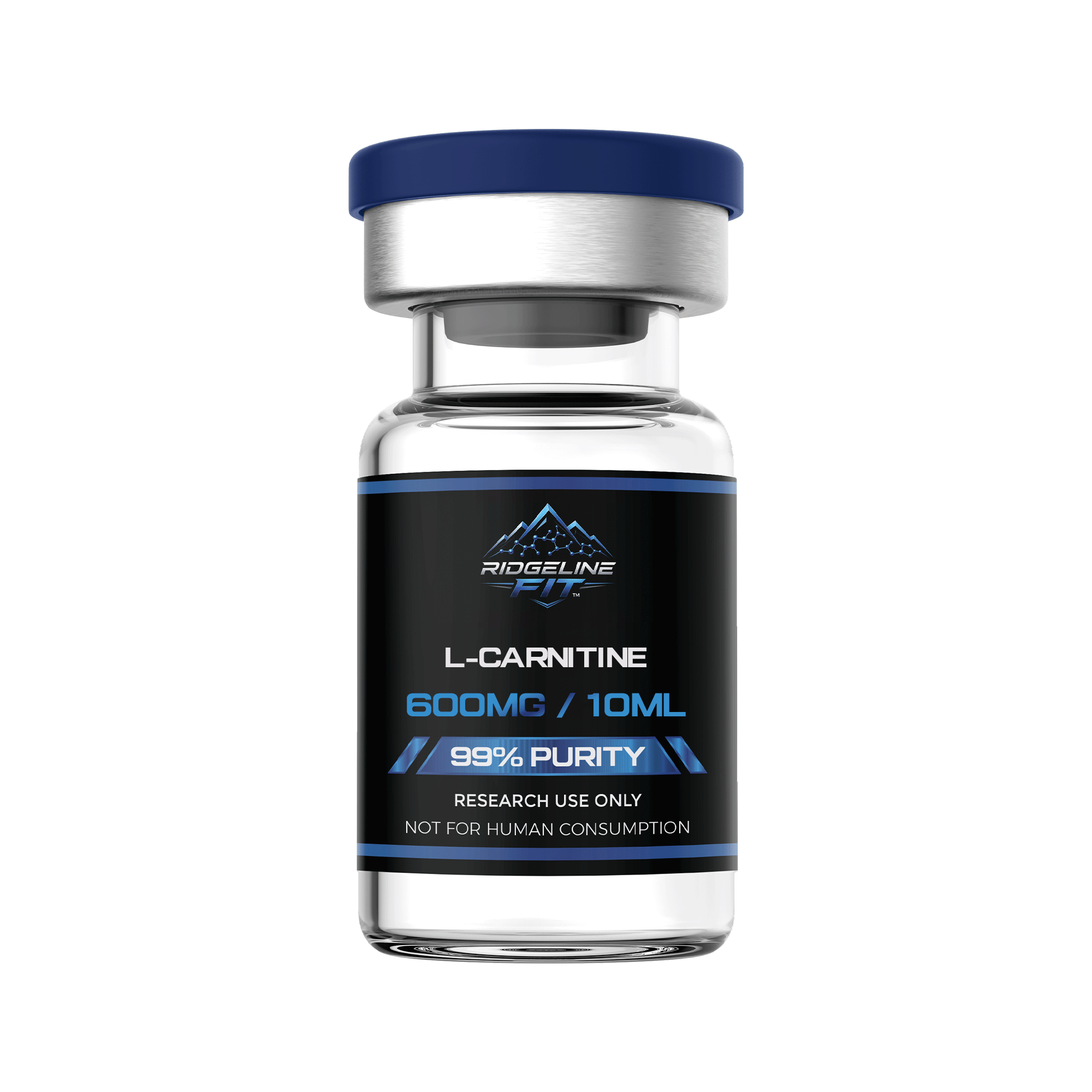
Chemical Structure of L-Carnitine 600MG / 10ML
Systematic name:
(R)-3-hydroxy-4-(trimethylammonio)butanoate, L-Carnitine
Molecular formula:
C₇H₁₅NO₃
Main research function:
Acts as a carrier of long-chain fatty acids into mitochondria and supports investigation of mitochondrial transport and acyl-compound removal pathways.
Product form:
600MG of L-Carnitine supplied in a 10ML volume. Formulation details, solvent, sterility, and storage requirements should be verified according to supplier documentation.
Observed Research Findings in Laboratory Models
Fatty Acid Metabolism and Mitochondrial Pathway Studies
L-Carnitine is used in controlled research settings to examine mitochondrial fatty acid transport, lipid oxidation pathways, and cellular energy-related mechanisms.
Glycemic Marker Pathway Analysis
Research models may evaluate L-Carnitine for modulation of glycemic markers in experimental systems, including glucose-related signaling, insulin sensitivity markers, and metabolic pathway behavior.
Experimental Energy Utilization and Recovery Pathway Studies
Laboratory and performance-related models use L-Carnitine to study energy utilization, lactate-related markers, fatigue-associated pathways, mitochondrial efficiency, and recovery-linked cellular responses.
Cardiac Biomarker Research Models
Some laboratory and clinical research contexts have explored L-Carnitine in relation to observed modulation of cardiac biomarkers in laboratory models, particularly where carnitine availability and mitochondrial energy metabolism are under investigation.
Observed Cellular Adaptation in Stress Models
Research may also examine L-Carnitine in cellular stress-response models to observe mitochondrial adaptation, metabolic resilience markers, and pathway-level responses under controlled experimental conditions.
Product & Quality Information
Specification:
600MG of L-Carnitine per 10ML. Verify concentration, formulation details, and supplier specifications before laboratory use.
Form:
Aqueous or solution-based research-grade preparation depending on supplier documentation.
Purity & testing:
Research-grade quality, commonly tested for identity and purity according to supplier standards.
Storage conditions:
Store according to supplier instructions, commonly in a cool, dry environment and protected from light. Refrigeration or frozen storage may apply depending on formulation.
Intended use:
For laboratory and animal-model research only. Not for human therapeutic, dietary, or veterinary use.
Research Use & Handling
Measure required volume for experimental use.
Follow validated laboratory protocols, sterile handling procedures, and institutional research guidelines.
Store under validated laboratory conditions
This product is supplied strictly for scientific and laboratory research use. It is not approved for human or veterinary therapeutic use or as a dietary supplement. No dosing, safety, clinical, or medical guidance is provided.


Reviews
There are no reviews yet.